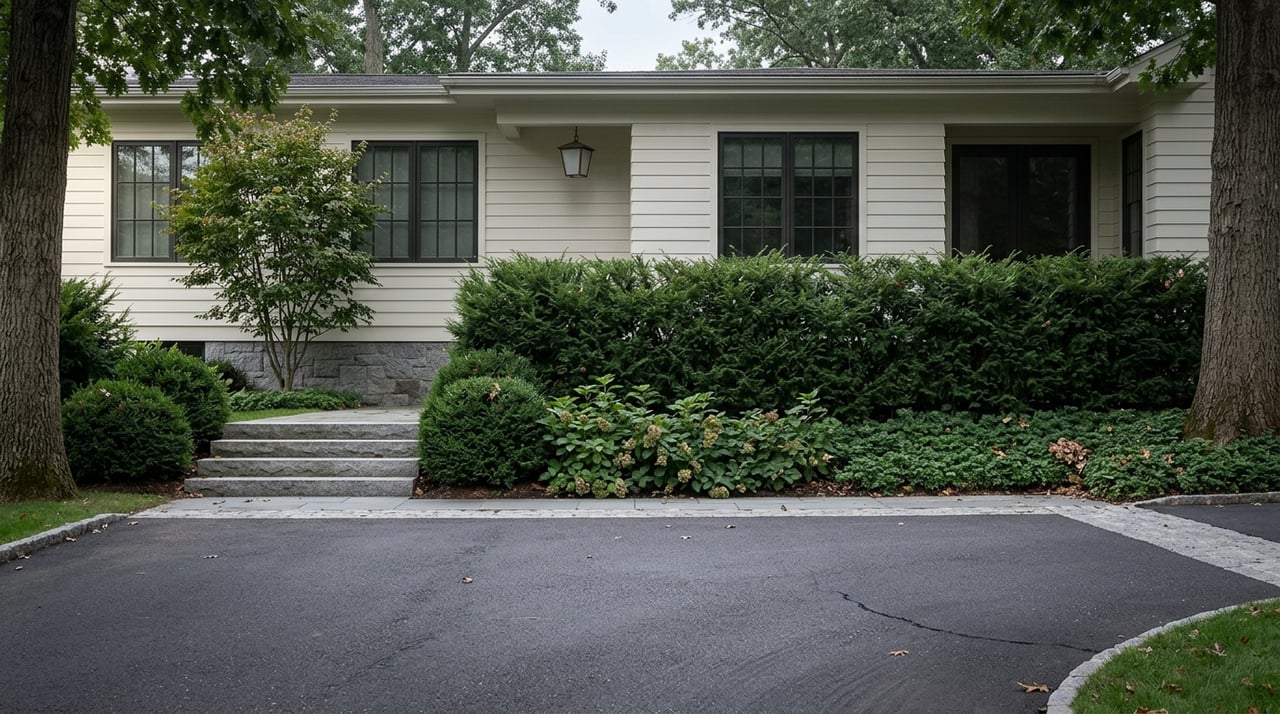
Looking at homes in Weston and wondering why two properties with similar acreage can feel completely different? That is a common question, especially in a town where land, privacy, and day-to-day setting are shaped by more than the number on a listing sheet. If you want to understand how a Weston property may actually live, this guide will help you look past lot size and focus on what really affects your experience. Let’s dive in.
Lot Size Is Only the Start
Weston is built around low-density single-family zoning, and that framework has a major effect on how properties feel. The town’s zoning includes minimum lot sizes of 60,000 square feet in District A, 40,000 square feet in District B, 30,000 square feet in District C, and 20,000 square feet in District D, along with meaningful frontage and setback requirements.
Those rules are designed to preserve Weston’s semi-rural character. The town’s housing plan also notes that Residence A is the largest district, covering just over 70% of zoned land area. In practical terms, that means the overall pattern of development in Weston often supports more open spacing than you might find in denser suburban communities.
Still, paper acreage does not always equal usable space. A large lot may include sloped land, wetlands, wooded areas, or setback constraints that shape where outdoor living, play space, or expansion can realistically happen.
Topography Shapes Daily Living
Weston’s landscape is one of the biggest drivers of setting. Town materials describe gently rolling terrain, wetlands, mature trees, stone walls, and estate-era plantings, all of which contribute to the feel of individual properties.
The town’s GIS system tracks topography, wetlands, flood hazard areas, conservation land, easements, and parcel boundaries. That matters because two homes with similar square footage and lot size may offer very different outdoor experiences depending on the land itself.
Level Land Versus Sloped Land
A level lot often gives you more immediate flexibility for recreation, patios, gardens, or simpler outdoor use. A sloped lot may offer a more tucked-in feel, broader views, or stronger separation from the street, but it can also affect driveway design, access, and how the home sits on the site.
Weston’s flexible-development rules make the town’s priorities clear. New site plans should minimize changes to natural features and topography, preserve wooded areas and open land, follow natural grade where possible, and preserve stone walls and existing vegetation.
Wooded Versus Open Settings
A wooded lot can create a sense of screening and enclosure. An open lot may feel brighter and more expansive, but it can also expose more of the home to neighboring views or the road.
That is why one Weston property may feel private because of mature tree cover, while another may feel private because the house placement, slope, and bordering land create distance. The setting is often layered, not defined by a single feature.
Privacy Often Depends on the Lot’s Edges
In Weston, privacy often comes from what borders a property, especially beyond the rear lot line. A home may feel more secluded because it backs up to open land, conservation land, woods, or a lightly developed area, even if the lot itself is not the largest in town.
The Conservation Commission owns and maintains about 1,800 acres of protected land open to the public for passive recreation, along with about 90 miles of trails, fire roads, and outlooks. For a buyer, that can create a broad and appealing outlook. It can also mean that “private” and “quiet” are not exactly the same thing.
What Conservation Land Can Mean
A home abutting conservation land may enjoy fewer immediate backyard neighbors and a more open visual backdrop. That can be a major lifestyle advantage if you value natural scenery and a sense of separation.
At the same time, public trails are marked by white W symbols, most trails are multiple use, and some open fields have agricultural access around their perimeter. So if a property borders conservation land, it is smart to understand whether the adjacent land is truly tucked away or whether there may be trail activity, managed field use, or periodic maintenance nearby.
Why Boundaries Matter
Weston surveys conservation boundaries to clarify where private property ends and conservation land begins because boundary issues and encroachments do happen. For buyers, that makes boundary clarity an important part of evaluating privacy and use.
A wide view across protected land can be a great asset, but you should also know what is public, what is private, and how that line affects your expectations. In Weston, that distinction can shape both enjoyment and long-term planning.
Road Character Influences Setting
Weston’s road network plays a big role in how a home feels from the moment you arrive. The town protects the character of many scenic roads, including Boston Post Road, Church Street, Concord Road, School Street, and Wellesley Street, among others.
That scenic, tree-lined pattern contributes to the town’s well-known sense of calm and space. It also means that the drive to a home, the view from the street, and the way a property sits within its surroundings can be just as important as the home itself.
Scenic Roads Feel Different
Homes on scenic roads often carry a quieter, more established atmosphere. Mature trees, road curves, and preserved roadside character can create a strong sense of arrival.
For some buyers, that setting is the goal. For others, convenience to Weston Center or a more compact neighborhood pattern may matter more than a scenic-road address.
Private Roads and Pocket Settings
Weston’s flexible-development rules allow features such as private roads, smaller road widths, and preserved buffers. That helps explain why some neighborhoods feel tucked away, almost cul-de-sac-like, while others feel more directly connected to through roads and the broader town network.
This difference can be subtle in photos but clear in person. A private-lane setting may feel more secluded and quiet, while a through-road location may feel more connected and active.
Weston Center Versus Secluded Settings
Not every Weston home offers the same type of daily experience. A property near the Town Green District often feels different from one set farther out along a scenic road or near conservation land.
The Town Green District is the civic heart of Weston, and the town’s improvement project there focuses on pedestrian safety, parking, sidewalks, public activity, and streetscape improvements. So if you want a home with easier access to a central area and a more active feel, proximity to Weston Center may matter.
Near the Town Green
A home closer to Weston Center may offer a more convenient and connected setting. That can appeal to buyers who want easier access to civic destinations and a more active day-to-day atmosphere.
Weston’s housing plan notes that the town has about 32 miles of public and school sidewalks, but many roads do not connect into a continuous walking network. That means even a home that seems close on a map may feel different in practice depending on actual sidewalk continuity and road design.
Estate-Edge and Quiet-Lane Living
A home set deeper into town, behind trees, along a scenic road, or beside open land may feel markedly more secluded. For many Weston buyers, that is a major part of the appeal.
Examples in town show how varied these settings can be. Chiltern Hundreds includes sloping land, curved streets, and lots ranging from about 0.14 acre to 3 acres, while Kendal Common was developed on former golf-course land with one- to two-acre lots, some remaining wetlands, and commonly owned land including a playground and vernal pool.
What to Notice During a Weston Tour
When you tour homes in Weston, it helps to look beyond finishes and floor plans. The real question is how the land and surroundings support the lifestyle you want.
A thoughtful tour should help you compare not just the house, but also the setting around it. In a town like Weston, that broader context can affect privacy, usability, maintenance, and resale appeal.
Your Weston Setting Checklist
- How much land do you want on paper versus how much usable yard space you want in reality
- What borders the back of the lot: woods, conservation land, another house, or a road
- How much slope, driveway length, or retaining-wall work you are comfortable with
- Whether you prefer a more civic setting near Town Green or a quieter scenic-road or private-road setting
- How comfortable you are with possible trail activity, field access, or seasonal maintenance near open land
Why This Matters for Buyers and Sellers
For buyers, understanding Weston’s land patterns can help you avoid focusing too narrowly on acreage alone. The best fit often comes from matching the property’s topography, borders, road setting, and overall feel to your priorities.
For sellers, this same idea shapes positioning. A property’s value story may come from its conservation backdrop, level lawn, mature screening, scenic-road approach, or proximity to Weston Center, not simply its lot size.
In other words, setting is part of the home’s market identity. In Weston, that identity often starts with the land, but it is defined by how the land actually lives.
If you are weighing a move in Weston, the right guidance can help you interpret what a property offers beyond the basic specs. The Donahue Maley & Burns Team brings local perspective, thoughtful buyer and seller representation, and a polished, high-touch approach to every step.
FAQs
How does lot size affect privacy in Weston?
- Lot size matters in Weston, but privacy often depends just as much on setbacks, tree cover, topography, and what borders the property, especially if the rear lot line abuts open or conservation land.
What does conservation land mean for a Weston home?
- A Weston home near conservation land may have broader views and fewer direct backyard neighbors, but it may also sit near public trails, managed fields, or other passive recreation areas.
How does topography affect a Weston property?
- Topography can affect usable yard space, driveway design, house placement, and how private or open a property feels, even when two lots have similar acreage.
What is the difference between Weston Center and more secluded areas?
- Homes near Weston Center often feel more connected to the town’s civic core, while homes farther out on scenic roads or near open land often feel quieter and more secluded.
What should you look for when touring land in Weston?
- When touring property in Weston, pay attention to usable yard space, slope, bordering land, road type, driveway approach, and whether the setting matches your preference for convenience, quiet, or a balance of both.