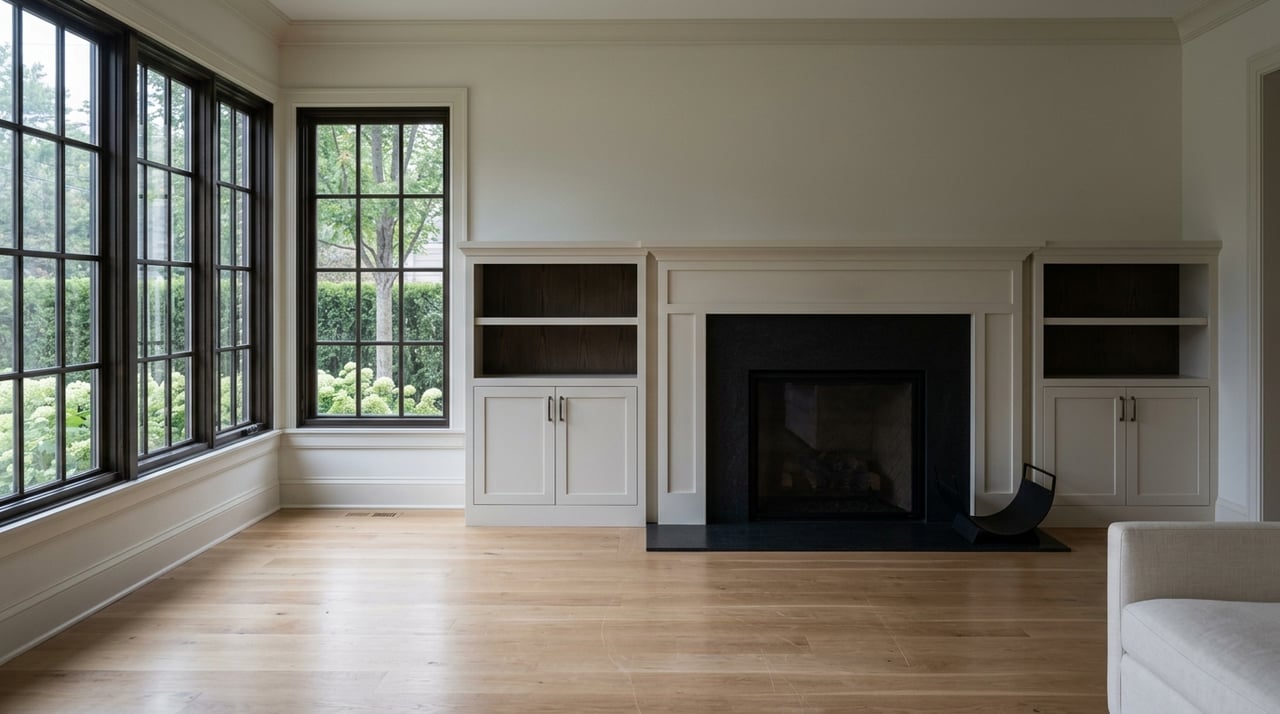
If you are house hunting in Wellesley, one question comes up fast: should you buy a newly built home or choose an older property and renovate it? In a market where inventory is competitive and many homes carry distinct character, that decision can shape your budget, timeline, and daily life for years to come. The good news is that each path can work well, as long as you understand how Wellesley’s local rules and inventory mix affect the process. Let’s dive in.
Why this choice matters in Wellesley
Wellesley is not a market where new construction and renovation exist in equal supply. Redfin’s March 2026 snapshot shows a median sale price of $1,825,000, a 98.4% sale-to-list ratio, and homes selling in about 19 days. Realtor.com also shows 129 active listings in Wellesley, with 17 new-construction homes averaging 22 days on market.
That matters because newly built homes are available, but they are still a modest share of the overall inventory. In practical terms, you are often choosing between a limited number of move-in-ready new homes and a broader pool of existing homes that may need updates, major renovation, or even a rebuild.
What new construction offers
For many buyers, new construction is appealing because it can offer a more predictable finished product. You may get modern layouts, updated systems, current energy-code compliance, and fewer immediate repair projects. If your priority is a turnkey home with minimal near-term work, this route can feel simpler at first glance.
New construction can also be attractive if you want a home designed around how people live today. Open kitchens, mudrooms, flexible work areas, and newer mechanical systems are often part of the package. In a fast-moving market, that convenience can carry real value.
New construction inventory is limited
Even in an active market, the number of newly built homes in Wellesley is relatively small. With 17 new-construction listings out of 129 active listings, buyers may find that location, lot size, or design options are narrower than they expected.
That means you may need to compromise on one or two priorities to get a finished, newly built home. If your ideal street, lot, or setting is more important than having everything brand new, renovation may open more doors.
New construction can involve more than buying
In Wellesley, a rebuild or major new-home project is not just about design and budget. The town’s zoning and permitting process can influence whether a project moves smoothly. The Planning Board requires certification of the adequacy of the way before a building permit for a new one- or two-family dwelling, a reconstruction after removal of 50% or more of the existing footprint, or an addition that increases the footprint by 50% or more.
For you as a buyer, that means a teardown or rebuild may involve site-access and approval questions, not just construction choices. A property that looks straightforward on paper may carry a more layered review path once plans are submitted.
Large House Review affects some projects
Wellesley’s Large House Review process can shape the timing of certain new homes. The town states that new houses are subject to Large House Review when the proposed home’s Total Living Area plus Garage Space, or TLAG, exceeds the district threshold.
The town estimates that process at 3 to 4 months from submission to receipt of a building permit. Separately, the Building Department says review of a new construction permit generally takes 10 to 14 days, though other project types may be shorter. If timing matters to you, that difference is important.
What renovation offers
Renovation often gives you more flexibility in location and home style. In Wellesley, many buyers are drawn to existing homes because they want a specific lot, street, or architectural character that may be hard to find in the new-construction segment.
This path can also let you improve the home over time instead of making every decision upfront. If you value the setting first and are comfortable with phased updates, renovation can be a smart way to align the house with your long-term goals.
Renovation is rarely just cosmetic
In Wellesley, even a renovation can quickly become more complex than expected. The town says most construction requires a permit, and permit fees are due when you apply. The April 1, 2025 fee schedule update increased permit fees for building, electrical, plumbing and gas, and sheet metal work.
The MA Stretch Energy Code also applies to new residential buildings and to renovations or additions to existing residential buildings. So if you are updating an older home, code compliance is part of the equation, not an afterthought.
Older homes may trigger demolition review
If the home was built on or before December 31, 1949, Wellesley’s demolition review bylaw may come into play. The bylaw applies if an owner wants to demolish the dwelling, or remove or enclose 50% or more of the exterior structure.
If the Historical Commission determines the building should be preserved, the town says a 12-month delay can be imposed before demolition permits are issued. For buyers considering a major renovation, partial teardown, or rebuild, this is one of the biggest timing factors to understand early.
Large additions can face review too
Renovation does not always stay in the renovation lane. Wellesley says additions that raise TLAG by at least 10% and end above the threshold can require Large House Review.
That means a project that starts as an addition can move into a more involved approval process. If you are comparing a large renovation to a rebuild, the review path may be closer than you think.
How neighborhood character shapes the decision
Wellesley has preservation tools that reflect the town’s attention to neighborhood character. The town says Neighborhood Conservation Districts were created in response to the pace of demolitions in the early 2000s, and that they focus on neighborhood character rather than zoning-style dimensional standards.
Wellesley currently has one Neighborhood Conservation District and another proposed. If you care about a mature streetscape, established architectural context, or the feel of a particular block, renovation may be the more natural fit.
The middle path: adding flexibility without a full rebuild
Sometimes the best answer is neither a full new build nor a major whole-house renovation. Wellesley allows accessory dwelling units, or ADUs, in several forms. The town says an ADU can be inside the existing house, attached as an addition, or detached as a cottage or converted garage, and that state law allows certain ADUs by right.
For some households, an ADU can create flexible space for guests, work, or extended household needs without taking on the scope of a teardown. If your goal is functionality rather than a complete reset, this option may be worth exploring.
New construction vs renovation at a glance
| Factor | New Construction | Renovation |
|---|---|---|
| Inventory | Smaller share of available homes | Broader pool of existing homes |
| Condition | Typically turnkey | May range from light updates to major work |
| Layout | Often designed for current preferences | Can be customized over time |
| Approvals | May involve road-adequacy certification and Large House Review | May involve permits, energy code, demolition review, and Large House Review |
| Timing | Can be faster if already complete, slower if review is needed | Can stretch if scope grows or preservation review applies |
| Character | Often a blank-slate feel | Often preserves lot context and existing architecture |
Questions to ask before you choose
Before you move forward, it helps to narrow the decision to a few practical questions:
- Do you want a move-in-ready home, or are you open to living through a project?
- Is your top priority the finished product, or the location and lot?
- Are you considering a house built on or before December 31, 1949?
- Could your plans trigger Large House Review or demolition review?
- Is your timeline flexible enough to handle added approvals?
- Would an addition or ADU meet your needs without a full rebuild?
These questions matter because in Wellesley, the line between renovation and reconstruction can blur quickly. The more clearly you define your priorities upfront, the easier it is to identify the right opportunities.
Which path is right for you?
If you value convenience, updated systems, and a predictable finished result, new construction may be the better match. Just remember that in Wellesley, limited inventory and local review requirements can affect both selection and timing.
If you care most about a certain location, lot, or older-home character, renovation may give you more options. But it is important to go in with a realistic view of permits, code compliance, possible demolition review, and the chance that a large renovation starts to look a lot like a rebuild.
In a market like Wellesley, the best choice is rarely about which option is universally better. It is about which path best fits your priorities, your timing, and how much complexity you are prepared to manage.
Whether you are weighing a turnkey new build against an older home with potential, the right local guidance can help you compare opportunities with more clarity. The Donahue Maley & Burns Team can help you evaluate Wellesley homes through the lens of inventory, location, renovation potential, and long-term value.
FAQs
What does new construction inventory look like in Wellesley?
- Realtor.com shows 129 active listings in Wellesley, including 17 new-construction homes, which suggests newly built homes are available but remain a modest share of total inventory.
What local review can affect a new construction home in Wellesley?
- Depending on the project, buyers may need to consider road-adequacy certification, standard building-permit review, and possibly Large House Review if the proposed home exceeds the district TLAG threshold.
What makes renovation more complex for older homes in Wellesley?
- Most construction requires permits, the MA Stretch Energy Code applies to renovations and additions, and older homes may trigger additional review if the project involves major exterior removal or demolition.
What is demolition review for older Wellesley homes?
- For dwellings built on or before December 31, 1949, demolition review can apply if an owner proposes demolition or removal or enclosure of 50% or more of the exterior structure, and a 12-month delay may be imposed if the building is found preferably preserved.
What is Large House Review for Wellesley home projects?
- Large House Review applies to certain new homes and some additions when the project exceeds the town’s TLAG threshold, and the town estimates the process at 3 to 4 months from submission to building permit.
Can an ADU be an alternative to new construction or major renovation in Wellesley?
- Yes. Wellesley says an ADU can be internal, attached, or detached, which may offer added flexibility without the full scope of a teardown or whole-house rebuild.