The shed most of us bought corn from is gone. In its place sits a 4,300-square-foot heavy-timber pavilion that just won the highest architecture award in Boston. The Golden Ball Tavern has retired its friendly Revolutionary greatest-hits pitch for a yearlong exhibit about the people the Revolution failed. The Public Library is showing a Dover painter no one in town has seen before. And the trail network locals use on autopilot has a set of August-specific rules that trip up even longtime residents.
If you have lived in Weston for more than a few summers, this is the month to notice what has quietly been re-drawn under you.
The farmstand at 90 Wellesley Street is now an award-winning building
Land's Sake has occupied the same address for decades, but the structure you walk into this August is two years old and carries a very specific pedigree. Designed by Payette, the 4,300-square-foot farmstand was completed in 2024 and has since collected the 2025 Harleston Parker Medal, a 2026 AIA Small Project Award, and a 2025 Chicago Athenaeum American Architecture Award, among others. The Harleston Parker is the highest honor awarded by the Boston Society of Architects/AIA, recognizing "the most beautiful piece of architecture, building, monument or structure within the City or Metropolitan Parks District limits," and it was established in 1921.
Weston has a lot of pretty buildings. It does not have another one carrying that medal.
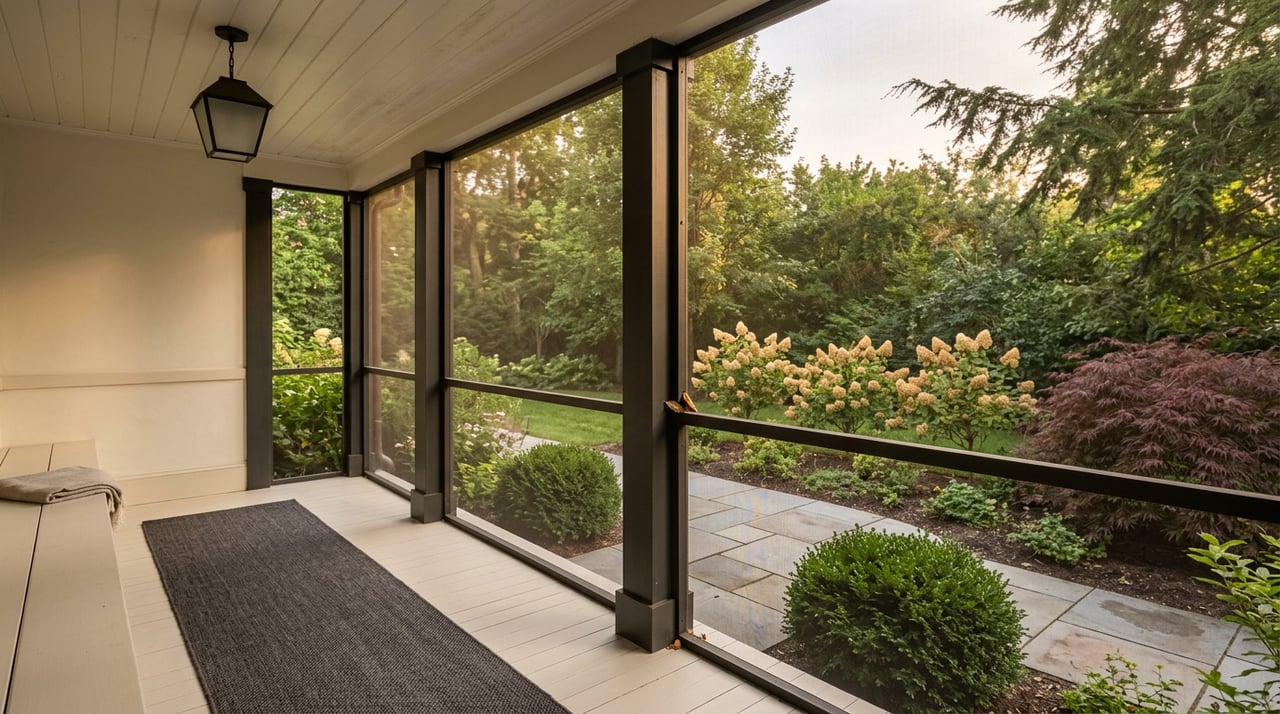
The design is worth looking up from your tote bag to notice. The pavilion is capped with a solar array and enclosed by a wood curtainwall of sliding glass panels that transform into an open-air structure during the warmer months. A 36kW south-facing solar array feeds the building directly and pushes excess to the grid. Late August is the last stretch of the year the sliding panels stay open, so this is a short window on the building's warm-weather personality before it closes up for fall.
While you are there, the flower fields are at peak. Pick-your-own runs July through October, and last season the farm grew over 100 varieties using organic methods. A reusable cup is $18, and you are asked to bring it back on future visits. Specialty varieties, including snapdragons, sunflowers, and dahlias, have separate rules, so ask the farmstand staff before cutting. The farmstand itself is open Tuesday through Friday, 10am to 6pm, and Saturday and Sunday, 10am to 4pm.
An August-only show at the Public Library
The library's August exhibit is a solo show that will not appear anywhere else. "Whimsical Geometry," paintings by Dover artist Irina Gorbman, runs August 2 through August 30, 2026, with a free opening reception Sunday, August 2 from 3 to 5 pm and a closing reception Sunday, August 30 from 1 to 3 pm. The work is oil on canvas, often circular, with some pieces incorporating semi-precious stones worked into the surface, and most of it has never been shown before.
Two receptions is not the norm here. If you have never bothered with a library art opening because the format felt perfunctory, the closing on August 30 is a low-stakes way to catch the exhibit before the school-year calendar swallows every weekend.
The Golden Ball Tavern has a harder story to tell this year
The Tavern's ordinary pitch is the one every Weston fifth grader knows: the Jones family across 200 years, the "Weston Tea Party," General Gage's spies, and Paul Revere's men. Fine, and true. But the 2026 exhibit rewrites the emphasis.
The 2026 exhibit is called "Lost Liberties – Broken Promises," and it turns the museum's focus toward those "whose future was sealed by forces beyond their control," committed to illuminating the "broken promises" of the American Revolution with a focus on Weston history. The yearlong exhibit specifically addresses the enslaved, indigenous, displaced Loyalists, and veterans of Weston who were on the wrong side of history. It is funded by a Mass Humanities "Expand Massachusetts Stories – Promises of the Revolution" grant tied to the 250th anniversary.
For a house museum that has spent decades leaning into the town's Patriot mythology, this is a real recalibration, and 2026 is the year to see it.
| Anchor | August access | Admission |
|---|---|---|
| Land's Sake Farmstand | Tue–Fri 10–6, Sat–Sun 10–4 | Free entry; PYO cup $18 |
| Weston Public Library, "Whimsical Geometry" | Aug 2–30; receptions Aug 2 (3–5pm) and Aug 30 (1–3pm) | Free |
| Golden Ball Tavern Museum | Thursdays 10am–4pm | Members free; general $15; senior 65+ $12; under 18 free |
The trail network's August is governed by rules, not miles
Weston's trail count is the number people quote at cocktail parties. It is also the least useful part of the story. The Weston Forest & Trail Association maintains more than 100 miles of trails across town on more than 200 acres of conservation land and easements, though depending on how you count connectors the network runs somewhere between 90 and 103 miles. The real August question is which parcels are usable this week and under what rules.
A few specifics worth having in your head before you leave the driveway:
- Cat Rock and 80 Acres are gated to non-residents on weekends. The parking lot at the north end of Drabbington Way is the primary access to Cat Rock Park and the 80 Acres tract, and on weekends it is closed to non-residents. A visiting friend needs to be in a Weston-plated car or ride with one. Weekday access is unrestricted.
- Jericho closes in pieces when the beavers work. The 3.1-mile Jericho loop runs through 550 acres of forest, fields, and wetlands, and portions close periodically when beaver flooding makes the low sections impassable. In August, that risk is highest along the creek crossings.
- Leash rules change by property. Dogs may be off-leash under voice control on many Weston conservation lands, but they must be leashed on the Mass Central Rail Trail, at the Case Estates, and on the Legacy Trail and its connectors.
- Commercial walkers are capped. Commercial dog walkers need a permit and cannot walk more than five dogs at a time.
- Ticks are the loudest 2026 complaint. The Weston Reservoir Loop is two miles and 59 feet of gain, roughly 30 to 60 minutes around the perimeter fence. It is the most dog-heavy trail in town by a wide margin, and 2026 reviewers have been vocal about tick pressure along the fringe grass.
If you have lived here for years and never actually walked the Case Estates loop, this is the August to fix that. A compass rose set into the trail there is a memorial to George Bates, a former Conservation Commissioner and longtime treasurer of the Weston Forest & Trail Association. The five trail-head markers and the two pillars at the main entrance are cut from granite salvaged from the old Sears Estate and the original Field School. Roughly two hundred feet of the stone wall running along one edge of the property was a 1911 birthday present from Marian Case to her sister Louisa, and it has been described as the largest free-standing dry-laid wall in New England.
The land itself carries the same family story as the fields you pick flowers in. In 1909, Marian Roby Case started Hillcrest Gardens on the fields now farmed by Land's Sake as a practical school of agriculture and gardening for boys of Weston and surrounding towns, and the school operated from 1910 until 1943. In 1944, Case willed all of her land to the Arnold Arboretum, and in 1986 the Town purchased this area from Harvard. One family, one experimental farm, one civic instinct to keep the land open. That thread runs through the flower cup you carry out of the farmstand and the stone wall you walk past at Case.
What an ordinary Weston weekend looks like this August
Two habits worth changing this month.
The first: stop treating the Land's Sake stop as a groceries errand. Go on a Saturday morning before 11, walk into the pavilion with the sliding panels open, and take fifteen minutes to look at the building itself. The farm donates 30% of its produce for hunger relief and serves as an educational venue for more than 5,000 children a year. That is the context the architecture was designed to hold.
The second: treat a Thursday afternoon in August as Golden Ball Tavern time, not just because the tours run then, but because the "Lost Liberties" exhibit rewards a slower read than a Second Sunday crowd allows. Then walk the Case Estates loop from the same neighborhood on your way home.
The town does not advertise any of this well, which is the point of a field guide. If you have been in Weston long enough to think you know the summer rhythm here, 2026 is the year the anchors quietly moved.
If you are weighing what a Weston address delivers on an ordinary Tuesday, and how that shows up when it is time to buy or sell here, the team at Donahue Maley & Burns would be glad to talk. Schedule your complimentary home valuation.