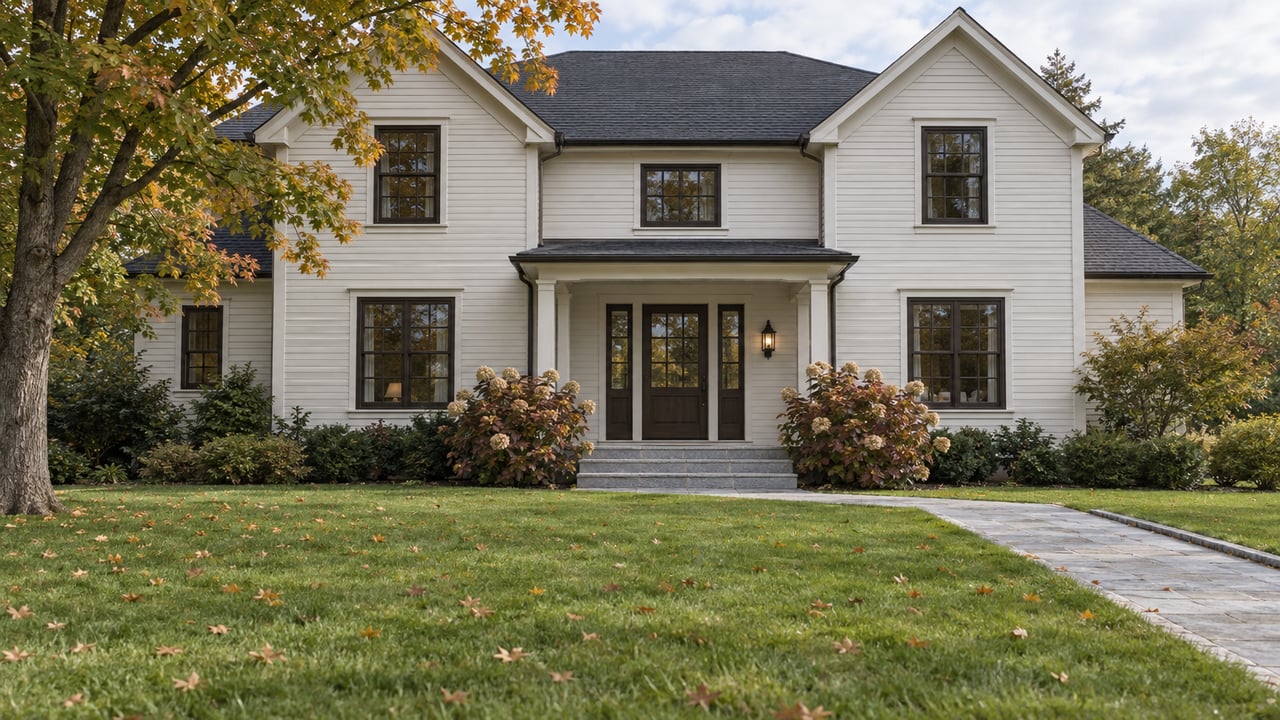
A couple touring a shingled colonial on a quiet Weston lot did the math the way most buyers do. Six bedrooms, a finished lower level with room for a seventh, and a barn that could become a pool house or an in-law suite down the line. What they did not do, because almost no one does on a first tour, was ask to see the septic design plan filed with the Board of Health. That plan, not the floor plan, is what actually decides whether the house they are imagining is legally the house they can build.
This is not a niche concern in Weston. It is the concern, because unlike most of its Metrowest neighbors, Weston has no path to a public sewer connection at all. Every home in town, from a modest Cape near the town center to a multi-acre estate on its wooded Southside, treats its own wastewater on site. The town's own Board of Health has stated plainly that Weston is not part of the MWRA sewer program and cannot connect to an existing sewer line, full stop. Town water reaches nearly every property. Town sewer reaches none.
That single fact reshapes how a buyer should evaluate any home here, especially the larger estate properties that make up so much of Weston's inventory. The question is not whether a house has enough square footage for the life you want to build in it. The question is whether the septic system buried in the yard was ever designed to support it.
The Number That Actually Governs the House
Pavel Buys Houses' guide to septic costs in Massachusetts explains that Massachusetts sizes septic systems by bedroom count, not by bathrooms and not by square footage. A three-bedroom home typically runs on a 1,000-gallon tank. Larger homes need 1,500 gallons or more, and the leach field scales right along with it. The logic is simple: bedrooms are what the state uses as a proxy for how many people might someday live in the house and how much water they will use every day showering, doing laundry, and running the dishwasher.
That means a system sized decades ago for a three-bedroom house does not simply stretch to accommodate a later addition unless someone deliberately built in the cushion. Weston listings make this visible if you know where to look. One recently marketed three-bedroom ranch in a Northside neighborhood was advertised with a four-bedroom septic system already in the ground, giving a future owner room to add a bedroom without ever touching the yard. At the far end of the market, a new construction estate overlooking the Weston Golf Club was built with a twelve-bedroom septic system engineered in from the start, alongside pre-built options for an elevator shaft and expanded parking, so the next stage of the house was designed before the first owner ever moved in.
Both are the exception, not the rule. Most Weston homes, especially the older stock that makes up so much of the town's character, were sized to the bedroom count that existed when the system went in the ground, with no cushion built in for the addition a buyer imagines later.
What an Upgrade Actually Costs
Weston's rocky glacial soil is part of what makes the town's wooded, two-acre lots so desirable, and it is also part of what makes septic work more expensive here than almost anywhere in the country. Massachusetts sits in a region that typically runs fifteen to thirty percent above the national average for septic installation, largely because because ledge and poor percolation often force an engineered solution instead of a conventional leach field.
Here is roughly what that looks like in practice.
| System Type | Typical Cost Range | When You'd Need It |
|---|---|---|
| Basic system, good soil, flat lot | $9,000 to $12,000 | Rare in Weston given the terrain |
| Standard system, typical Massachusetts conditions | $20,000 to $30,000 | Most straightforward replacements |
| Engineered or expanded system, poor soil or added bedroom capacity | $36,000 to $50,000 or more | Ledge, high water table, or a system being upsized to support more bedrooms |
A five-bedroom farmhouse project in western Massachusetts that needed a larger tank and pump system, plus engineering and landscaping restoration, landed around $36,000. That figure is a useful anchor for what a Weston buyer might face if a beloved older estate needs its system enlarged to match the bedroom count they actually want to live with.
What Happens at the Closing Table
Massachusetts requires a passing Title 5 inspection within two years of a sale, or within six months after if weather prevents the inspection at the time of sale, provided the seller discloses that to the buyer. The Massachusetts Real Estate Law Blog explains that the inspection results in one of three outcomes: pass, conditional pass, or fail. A conditional pass usually means something specific and fixable, like a damaged distribution box, needs repair before the Board of Health will sign off. A fail, most often tied to a compromised leach field, means the system has to be repaired or replaced, or the parties negotiate around it.
That negotiation typically takes one of two forms. The seller completes the work before closing and delivers a passing certificate. Or the parties agree to an escrow holdback, where funds equal to the estimated repair cost, sometimes a bit more as a cushion, are held back at closing until the buyer completes the upgrade. Either path adds weeks to a timeline that buyers moving from a sewered city or suburb rarely expect.
A passing inspection stays valid for two years, and stretches to three if the seller has documented annual pumping. That detail matters for anyone comparing two Weston properties: a home with a fresh, three-year-valid inspection and a clean pumping record is a genuinely different asset than one where the two-year window is about to expire.
What This Means If You're Touring Weston Estates This Fall
If you are searching Weston with room to grow in mind, whether that means finishing a basement, adding an in-law suite for aging parents, or converting a barn into guest space, the Title 5 report and the septic design plan on file with the town deserve the same early attention as the roof and the mechanicals. A few questions worth asking before you write an offer:
- What is the septic system's design bedroom count, and how does that compare to the bedrooms currently in the house?
- When was the last Title 5 inspection, and does it still have two or three years of validity remaining?
- Has the system been pumped annually, and is there documentation to prove it?
- If an addition is part of the plan, has anyone confirmed with the Weston Board of Health whether the current system can support it, or whether an expansion permit would trigger a septic upgrade first?
For sellers, the same information works in your favor if you get ahead of it. A Weston estate marketed with a septic system already sized for more bedrooms than the house currently has is a genuine selling point for buyers planning to grow into a home rather than out of it.
Weston's median single-family sale price sat near $2.6 million as of mid-2026, based on roughly 141 trailing-twelve-month transactions, on lots that average well over an acre and frequently exceed two. At that price point, a $30,000 or $40,000 septic question is not the kind of detail that should surface for the first time during a ten-day inspection period.
A Few Questions We Hear Often
Does every Weston home also rely on a private well? No. The town's water system reaches nearly all properties, so most homes draw drinking water from the municipal supply even though wastewater is handled entirely on site.
Can I add a bedroom without touching the septic system? Generally no. Adding a bedroom typically requires a building permit, and Weston's building department will check septic records as part of that approval. If the existing system is not rated for the added capacity, the permit gets held until the system is upgraded.
Who do I call with specific questions about a property's septic history? The Weston Board of Health maintains septic records and can be reached directly at 781-786-5030. For general guidance on the state process, the Massachusetts guide to buying or selling property with a septic system is a useful starting point.
If you are evaluating a Weston property with expansion in mind, or preparing to sell one, the Donahue | Maley | Burns Team can help you get ahead of the septic question before it becomes a closing-table surprise. Schedule your complimentary home valuation and let's talk through what your property can actually support.
This article is general information, not legal, tax or financial advice. Consult a qualified professional about your situation.