Thinking about a corporate move to Greater Boston and wondering where Weston fits? If you are balancing commute time, housing budget, and day-to-day lifestyle, Weston and the broader MetroWest corridor can offer very different answers depending on what matters most to you. This guide will help you compare Weston with nearby MetroWest towns so you can make a more confident relocation decision. Let’s dive in.
Why Weston stands out in MetroWest
Weston sits within the MetroWest region, a Framingham-centered corridor between Boston and Worcester that functions as both a residential and employment market. It is one of the core communities in the MetroWest Regional Collaborative, alongside towns such as Framingham, Natick, Wellesley, and Wayland.
For many relocation buyers, Weston stands out because it combines proximity to metropolitan Boston with a more private, suburban setting. The town describes itself as an attractive suburban community on the perimeter of metropolitan Boston, and that identity still shapes how many buyers experience it today.
What Weston feels like day to day
Weston has a long history that shows up clearly in its housing, streetscape, and land use. Incorporated in 1713, the town evolved from farmland to country estates and later to architect-designed residential growth.
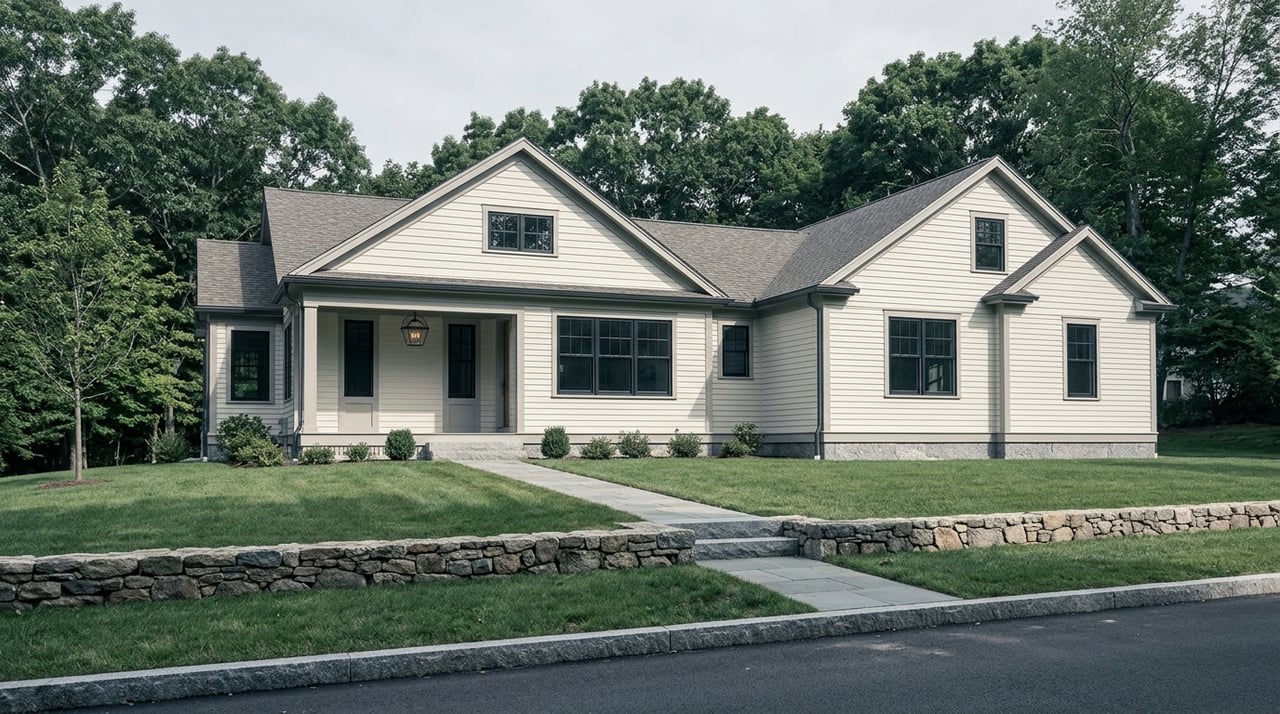
That history matters when you start touring homes. Weston is not primarily a market of uniform subdivisions or highly repetitive inventory. Instead, you are more likely to see individualized properties and a broad mix of architectural styles.
The town also has a strong preservation presence. Weston includes one local historic district, 10 National Register districts, and 26 historic areas, which helps explain why many homes feel established, distinctive, and tied to the town’s older development pattern.
Weston home styles you are likely to see
If you are relocating from outside Massachusetts, Weston’s housing stock may feel especially varied. According to the town’s history resources, common architectural styles include:
- Colonial
- Georgian
- Federal
- Greek Revival
- Italianate
- Second Empire or Mansard
- Queen Anne
- Shingle Style
- Tudor
- Bungalow
- International Style
- Cape Cod
- Colonial Revival
For executive buyers, this usually means your search may involve older, larger homes with more character and less standardization. It can be a strong fit if you value architectural detail, privacy, and properties that feel more custom than cookie-cutter.
Weston pricing: what to expect
Weston is firmly in the luxury tier of the MetroWest market. Realtor.com reports a May 2026 median listing price of $3.612 million, a median sold price of $2.5325 million, 57 active listings, 11 rental properties, and a median rent of $9,000 per month. Redfin’s most recent three-month median sale price is $2.698 million, with a median of 24 days on market.
The exact figures vary by source, but the overall message is consistent. Weston is a high-priced, relatively low-supply market where buyers should be prepared for a premium price point.
How Weston compares with nearby towns
If you are relocating with a defined budget, comparing Weston to nearby MetroWest towns is one of the fastest ways to narrow your search. Current listing medians show a meaningful spread across the corridor.
| Town | Median Listing Price |
|---|---|
| Weston | $3.612M |
| Wellesley | $2.495M |
| Natick | $982,500 |
| Framingham | $686,500 |
Weston sits near the top of this group, even compared with other affluent suburbs. Wellesley remains high-end, but still below Weston on current listing medians. Natick and Framingham come in at much lower price points, which can open up more options for buyers seeking flexibility on budget.
How much premium does Weston command?
For many transferees, the real question is not whether Weston is expensive. It is how much more expensive it is than nearby alternatives. Based on current listing medians, Weston commands a substantial premium over Natick and Framingham and also sits above Wellesley.
That premium often reflects a combination of factors, including larger homes, more individualized housing stock, preserved land, and a more estate-oriented feel in parts of town. If those qualities are central to your move, Weston may justify the price. If not, nearby towns may offer a better value match.
Commute options from Weston
Commute planning is one of the biggest relocation filters, and Weston is especially important to assess realistically. The town’s major road network includes Route 30, Route 117, Route 128/I-95, Route 20, and the Massachusetts Turnpike.
For rail commuters, Weston offers MBTA commuter rail service to North Station from Kendal Green and Hastings. The town reports typical travel times of about 28 to 29 minutes from Kendal Green and 30 to 31 minutes from Hastings.
There is currently no bus service in Weston. For that reason, Weston is usually most practical for buyers who are comfortable relying on a car, a commuter rail routine, or a combination of both.
Best commute fit for Boston-bound executives
If you work in or near Boston, the most realistic Weston commute usually depends on where your office is and how predictable your schedule is. Buyers who prefer flexibility often focus on highway access, while buyers who want a more structured commute may look closely at proximity to Kendal Green or Hastings.
In practical terms, Weston tends to work best when you can plan around either driving or commuter rail rather than expecting a broader transit network. That does not make it less appealing. It simply means commute fit should be tested early in your search.
Weston rentals and short-term landing options
Some relocation buyers prefer to rent first before purchasing. Weston can be challenging on that front because rental supply is relatively limited.
Realtor.com shows 11 homes for rent in Weston, compared with 91 in Natick and 336 in Framingham. If you need a temporary landing spot while you learn the area, nearby towns may offer more rental choice before you make a long-term purchase decision.
Lifestyle benefits that draw families to Weston
Weston appeals to many families because it offers a strong combination of open space, amenities, and community resources. The town has roughly 1,800 acres of protected land and about 90 miles of trails, fire roads, and hilltop outlooks.
That kind of access can shape everyday life in a meaningful way. If you value outdoor recreation, quieter surroundings, and room to spread out, Weston offers an environment that can feel distinctly different from denser suburban settings.
The town also supports a broad range of community resources. The recreation department offers a wide set of programs, the Weston Art & Innovation Center provides hands-on art and technology programming, and the public library emphasizes lifelong learning and enjoyment.
Weston’s history pages also highlight the Town Green District as the religious and governmental heart of the town for more than three centuries. For many buyers, that long-standing civic identity adds to the sense of continuity and place.
Schools and relocation decision-making
For many executive relocations, schools are a major part of the conversation. The town states that Weston High School’s SAT scores are consistently among the top public schools in Massachusetts, and college placements are consistently near the top in the state for public-school graduates entering four-year colleges.
If schools are a leading factor in your move, Weston is often on the shortlist for that reason. In practice, many buyers weigh those school-related considerations alongside commute and housing budget when deciding whether Weston is the right fit.
When Weston makes the most sense
Weston is often strongest for buyers who want privacy, open space, and school-centered amenities and who are comfortable paying a premium for an older, larger, and often architecturally distinctive home. It can be especially appealing if you are looking for a high-touch suburban lifestyle close to both Boston access routes and the broader MetroWest employment corridor.
MetroWest itself includes thousands of small and medium-sized businesses, along with major employers such as Bose, Boston Scientific, Cognex, EMC, Genzyme, Raytheon, Staples, TJX Companies, and U.S. Army Natick Laboratories. That makes the region relevant not just as a place to live, but also as a place to work.
When another MetroWest town may fit better
Weston is not automatically the right answer for every relocation. If your priorities lean more toward lower entry price points, more varied inventory, or a larger rental pool, towns like Natick or Framingham may be worth stronger consideration.
Wellesley can also be an important comparison if you want a high-end suburban market but hope to stay below Weston’s current pricing level. The right choice depends on the balance you want among budget, commute, home style, and lifestyle.
Why expert guidance matters in a Weston search
A Weston move can involve several moving parts at once. You may be comparing commuter rail access, highway access, school-related priorities, preservation-heavy housing stock, and a wide price spread across nearby towns.
For time-constrained relocation buyers, a team-based process can help simplify that complexity. When neighborhood research, showing coordination, negotiation, and transaction management are handled with clear structure and responsiveness, it becomes easier to move quickly without feeling rushed.
If you are weighing Weston against other MetroWest options, the goal is not just to find a house. It is to find the right fit for how you will actually live, commute, and settle into the region over time.
If you are planning a move to Weston or anywhere in MetroWest, the Donahue Maley & Burns Team can help you compare towns, refine your search, and navigate the process with experienced, concierge-level guidance.
FAQs
What is Weston, MA like for a corporate relocation?
- Weston can be a strong fit if you want a high-end suburban setting with open space, distinctive homes, and access to major roads and commuter rail, but it is best suited to buyers comfortable with premium pricing.
What is the most realistic commute from Weston to Boston?
- The most realistic options are typically driving via major highways or using MBTA commuter rail from Kendal Green or Hastings to North Station, since Weston currently has no bus service.
How expensive is Weston compared with Natick and Framingham?
- Based on current listing medians in the research, Weston is far more expensive, at $3.612 million compared with $982,500 in Natick and $686,500 in Framingham.
What kinds of homes are common in Weston?
- Weston has a wide architectural mix that includes Colonial, Tudor, Shingle Style, Cape Cod, Georgian, Federal, and other historic and traditional home styles.
Is Weston, MA a good choice for families moving to MetroWest?
- Weston may appeal to families who value protected land, trails, recreation resources, community amenities, and school-related considerations as part of their relocation decision.
Are Weston rentals easy to find for relocation buyers?
- Weston has relatively limited rental inventory, with 11 homes for rent in the research data, so buyers who want to rent first may also compare options in Natick or Framingham.